
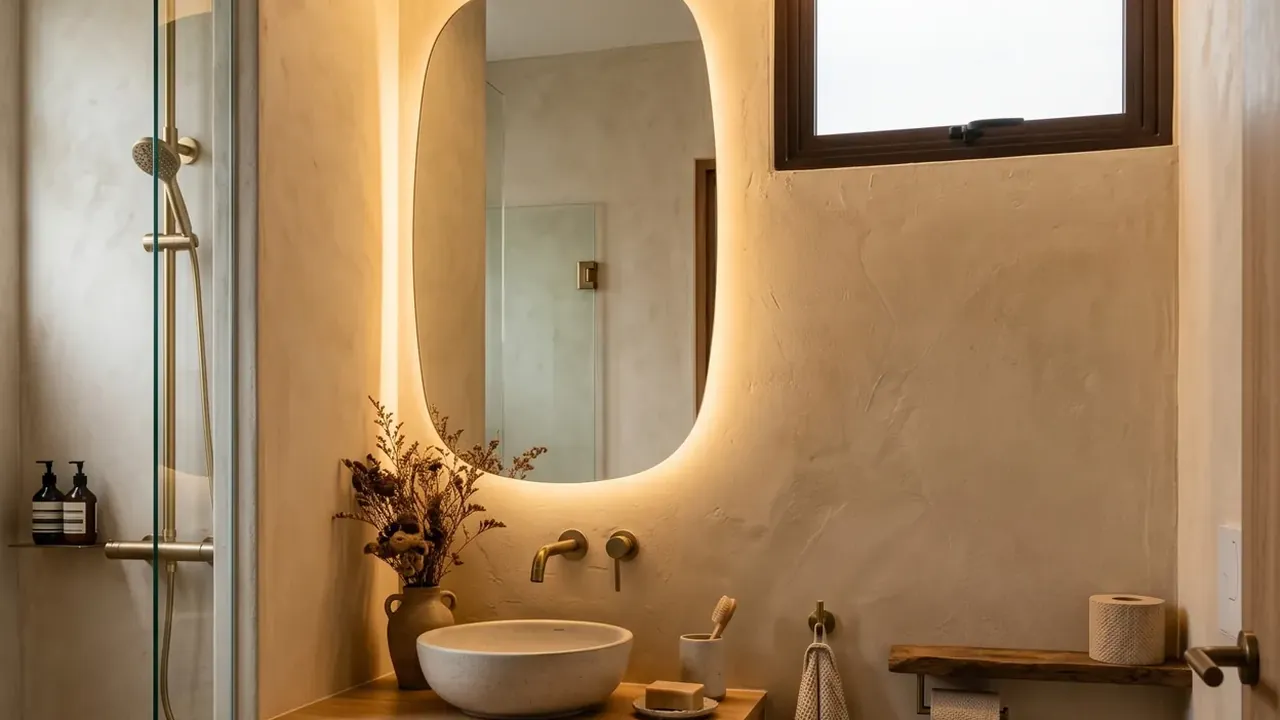
Wabi-sabi lets a home show its age.
Wabi-sabi interior design keeps the marks, knots and creases other styles hide. How it differs from Japandi, and which textured finishes survive a humid Singapore flat.
Wabi-sabi interior design builds a home around materials that show their age and the hand that made them: limewashed walls with a cloudy finish, timber with its knots left in, rough stone, crumpled linen, a bowl that sits slightly off true. Nothing is meant to look new for long, and wear is kept rather than hidden. In a Singapore flat it reads warm and quiet, close to Japandi but looser and earthier. The real work is choosing which imperfect finishes cope with our humidity and which simply end up looking neglected. If you are still comparing looks, start with our guide to interior design styles for a first home.
What wabi-sabi means
The phrase joins two old Japanese ideas. Wabi is a quiet, sober simplicity, the beauty of a modest life. Sabi is the beauty that comes with age and use. Both took shape around the tea ceremony, and the sixteenth-century tea master Sen no Rikyū is the figure usually credited with making humble, rustic tea wares an ideal, down to hand-thrown bowls prized for their irregular shapes. That is about as much history as a renovation needs. In a home, wabi-sabi is less a look you buy than a tolerance you build in: a willingness to let a wall mark, a worktop patinate and a chair wear where you sit.
Wabi-sabi vs Japandi
The two get confused because Japandi borrows from wabi-sabi and then tidies it with Scandinavian order. Japandi is calm and finished; wabi-sabi is calm and a little undone. Pick an element and flip between the two.
Walls · wabi-sabi
Limewash or lime plaster, brushed or trowelled so the hand shows. Cloudy, slightly uneven, and allowed to mark.
Japandi asks every object to earn its place. Wabi-sabi asks it to show where it has been.
Materials that carry it in a humid flat
Every wabi-sabi material is chosen for texture and age, and humidity speeds ageing up. Some finishes take that well. Others need a little help.
- Limewash. A mineral paint brushed on in layers, which gives the soft, clouded wall the style is known for. It breathes, so it copes with a humid room without blistering, but makers advise keeping it out of the shower and away from the edge of a bath, with a splashback behind the basin. It also marks more readily than ordinary paint, which is either a flaw or the point.
- Microcement. A thin, hand-trowelled cement coat that runs jointless across walls and floors, which is why it suits a bathroom. It is only as good as what sits under it: in a wet area it goes over a proper waterproofing layer, and it relies on its sealer to shed water, so ask how often that sealer needs renewing. If the surface beneath moves, it can show hairline cracks. Wabi-sabi forgives a hairline better than any other style; a leak is another matter.
- Raw timber. Bare wood takes up moisture from the air, swells, and can spot with mould in a closed, damp corner. An oiled finish keeps the matte, touchable look while giving the wood some protection, and it is best kept clear of the splash zones.
- Stone. Honed or tumbled stone looks right here; polished stone does not. Porous stones such as travertine need sealing, or soap and cooking oil will stain them, though a soft stain is more in keeping in this style than in any other.
- Linen and ceramics. Linen creases, and that is the look, but it dries slowly, so curtains need air moving past them. Handmade ceramics are the easiest part: a few pieces in daily use do more than a shelf of display.
Where it works in an HDB
The bathroom is the most natural fit. Warm microcement on the walls, a stone vessel basin and a softly lit mirror carry the style in very few moves, and a jointless surface is easy to wipe down. In the living room, one limewashed wall behind the sofa and an oiled timber bench say enough; a whole flat of raw finishes can tip from earthy into unfinished. Bedrooms suit it too, with linen bedding left a little rumpled and a low, warm lamp. Keep the storage closed and plain, because wabi-sabi is not an excuse for clutter. The calm still depends on surfaces clear enough to show their texture.
Hand-applied finishes such as limewash and microcement are mostly labour, and any finish over a wet area depends on the waterproofing beneath it, so they sit in a quote differently from paint and tile. Our page on how a quote is built shows where those rows go.