
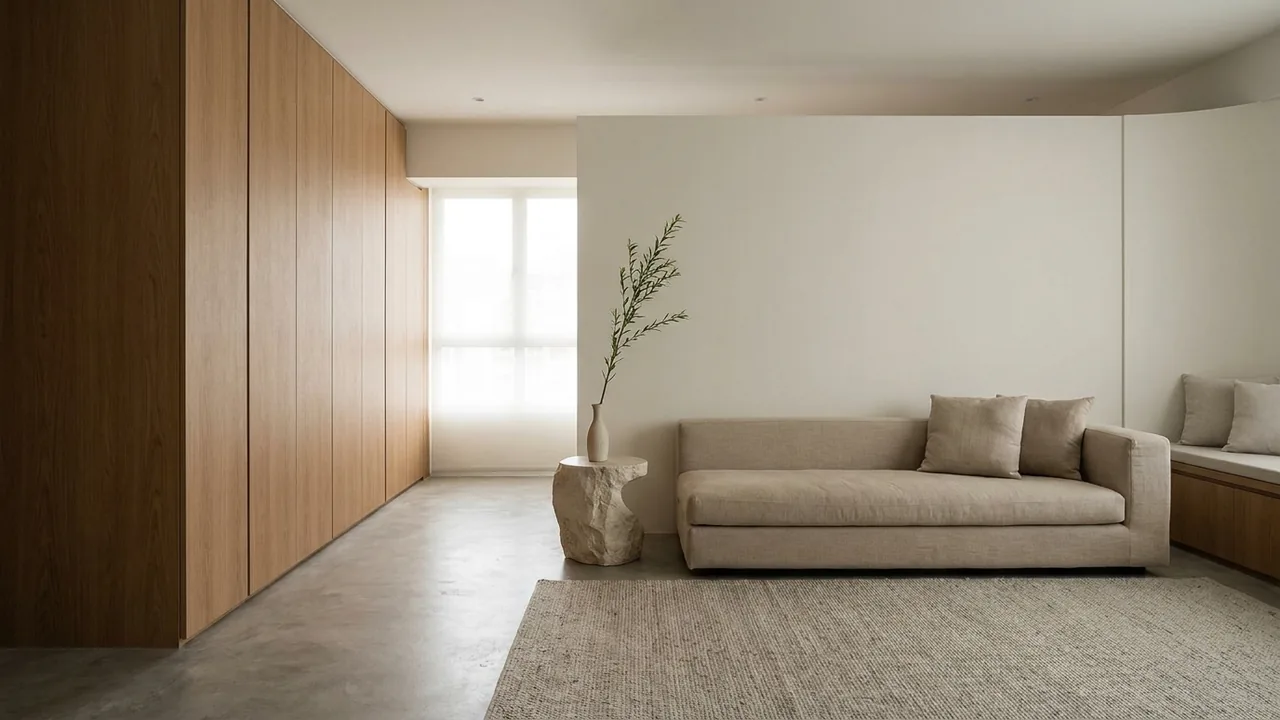
Minimalism is edited, not empty.
The calm you see in the photos is not a bare room. It is planned storage doing the hiding. Here is how minimalism actually works in a Singapore flat.
Minimalism is the most misread style we get asked for. People picture an empty white room and either want it or fear it. The reality is neither. A minimalist home is not one with less in it, it is one that shows less: clear surfaces, a few good materials, and everything else tucked out of sight. The stillness in the photo is not the absence of stuff, it is cabinetry doing its job. Understand that and the style becomes possible in a normal home. If you are still weighing styles, our overview of interior design styles for a first home sets minimalism next to the alternatives.
Edited, not empty
Good minimalism feels calm and warm, not cold and bare. The difference is restraint with a bit of soul: one wood, one stone, a matte finish, and negative space treated as a feature rather than a gap to fill. What it is not is a stark white box you are afraid to touch. Warmth keeps it liveable, a timber run, a linen sofa, one soft thing, so the room reads considered instead of clinical.
The honest test
Before you commit, count what actually lives on your surfaces today. Tick everything you currently leave out, and the tally turns it into your real storage brief.
Tick the ones that sit out in your place today. Every item you check is something minimalist calm depends on your storage swallowing.
Minimalism does not ask you to own less. It asks you to decide what is on view, and to build the storage that hides the rest.
Where the calm comes from
Almost all of it is carpentry and discipline, not decoration.
- Concealed storage. Full-height, handleless cabinetry along one wall swallows the clutter you just counted. This is the engine of the whole look.
- A tight palette. One wood, one stone or solid surface, one wall colour. Fewer materials, repeated, read calmer than many.
- Negative space. Leave walls and surfaces deliberately empty. The gaps are the design, not unfinished business.
- Hidden handles and clean lines. Push-to-open fronts and flush details keep the eye moving without catching.
The traps
Three catch most first attempts. The first is going all-white and cold, which photographs sharp and lives harsh; a warm wood or a soft textile fixes it. The second is skipping the storage, so the flat looks minimal for a week and cluttered forever after; the surfaces have nowhere to send anything. The third is buying “minimalist” decor to look the part, which is the opposite of the point. Because so much rests on carpentry, minimalism can cost more than a busier scheme, the money simply moves from accessories into built-ins. You can see how that lands on a first-home budget on our cost page.
Minimalism rewards planning more than any other style. Decide what stays on view, build enough concealed storage to hide the rest, keep the palette tight, and let the empty space do the talking. Get that right and a small Singapore flat feels unusually calm, without ever feeling empty.